Home / Operations and admin / KA-026
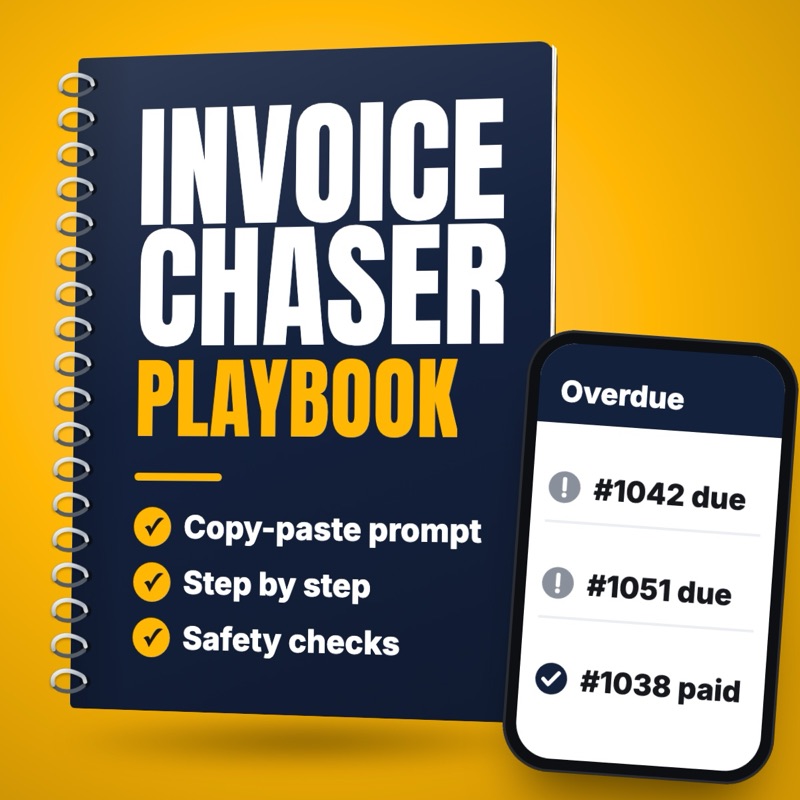
Chase unpaid invoices with polite reminders
Draft friendly, firm reminders for overdue invoices on your own schedule, for example at 3, 14 and 30 days late, for a person to check and send.
- Who it suits
- Small business owner, office manager, bookkeeper, freelancer
- Time saved
- About 10 to 20 minutes per overdue invoice across the reminders (estimate)
- Level
- Easy
- Updated
- Oct 24, 2026
The waste this cuts
Doing billing at 10pm, chasing money you already earned because asking feels awkward.
Why this task
You did the work, sent the invoice, and the money hasn't come in. Chasing it feels awkward, so it sits, and you end up doing billing at 10pm or letting it slide for weeks. An agent can draft the right note for each overdue invoice in a few minutes, and you decide what goes out.
You help [BUSINESS NAME], a [TYPE OF BUSINESS] in [TOWN], chase overdue invoices politely.

Our payment terms (use this wording, don't add to it): [PAYMENT TERMS, ANY LATE FEE, HOW TO PAY]
Tone: [FOR EXAMPLE: FRIENDLY, CLEAR, NEVER RUDE]
Reminder rhythm: [FOR EXAMPLE: 3 DAYS LATE, 14 DAYS LATE, 30 DAYS LATE]

Overdue invoices (one per line):
[CUSTOMER FIRST NAME | INVOICE NUMBER | AMOUNT STILL OWED | DUE DATE | PARTIAL PAYMENTS, IF ANY]

For each invoice:
1. Work out which reminder is due today from the due date and our rhythm. If none is due, say so and skip it.
2. Write one email under 100 words. Use their first name, the invoice number, the amount still owed and the due date exactly as given, and how to pay.
3. The first reminder assumes it slipped their mind. The later ones are firmer but still polite, and offer to talk if something is wrong.
4. Mention a late fee only if it is in our terms above, using our exact wording.
5. Never threaten collections, legal action or credit reporting, and never change an amount.
6. If something is missing, write [CHECK] in the draft.

Return a list: customer, invoice, which reminder, the draft. Do not send anything.
Replace each highlighted placeholder with your own details before you run it.
Steps
- Export or list your overdue invoices: customer first name, invoice number, amount still owed, due date, and any partial payment.
- Write your payment terms in plain words, exactly as they appear on your invoices, including any late fee and how people can pay.
- Paste the overdue list and your terms into the prompt.
- Read every draft. Check the invoice number, the amount and the due date against your invoicing app.
- Send each approved reminder from your own email. A person always presses send.
- Mark invoices as paid as the money comes in, and only remind the ones still open.
- If an invoice is still unpaid after your last reminder, call the customer or decide your next step yourself. Don't let the agent escalate.
What you get
A list of overdue invoices with the reminder due today for each, and a short, polite draft that names the invoice, the amount and the due date exactly as in your records. Invoices with nothing due today are skipped, and missing details are marked [CHECK].
What can go wrong, and the check for each
A draft shows the wrong amount or a payment the customer already made.
CheckYou check each draft against your invoicing app, and the prompt uses only the amounts you paste.
A reminder sounds threatening and damages a good customer relationship.
CheckThe prompt bans threats, and you read every draft before it goes out.
The draft mentions a late fee your terms don't have, or gets it wrong.
CheckThe prompt uses only your exact terms. Check your local rules on late fees before you add one.
Customer names and invoice details are pasted into tools carelessly.
CheckUse only tools your business has approved, and paste first names and invoice numbers, never full customer files.
Related playbooks

Compare supplier or contractor quotes in one table
Put supplier or contractor quotes from emails or PDFs into one table, with terms as written, differences and gaps flagged. The owner decides.
Turn meeting notes into action items and follow-up emails
Turn meeting notes or a transcript into actions with owners and due dates. Draft a follow-up email per owner that waits for approval.
Weekly inbox triage with draft replies for urgent email
Sort a week of email into reply today, delegate, schedule and archive, with draft replies for the urgent pile. Nothing is sent automatically.